Scaling Nuclear Power Step 1 – Develop and Ready Sites
As we entered 2025, we wrote that if we truly want to deliver on the pledge to triple global nuclear capacity by 2050, this is the year to start making things happen. While attention is often focused on reactor designs, financing models, or supply chain readiness, you can’t build new plants unless you have somewhere to put them – and that means identifying, securing and developing sites.
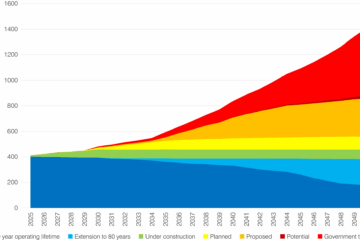
As we said in our previous post, tripling would mean about 880 GW of new nuclear for a total of more than 1,300 GW of nuclear power in operation by 2050. Split evenly between conventional large GW reactor and Small Modular Reactors (SMRs), this would translate into about 440 new large reactors and anywhere from about 1,300 to 4,000 new SMRs (depending upon their size).
Most reactors today are built in clusters of 2 – 4 units per site. If we assume that future builds have on average four units per site, the world will need at least 400 new nuclear sites by mid-century, and depending on how quickly SMRs scale, maybe twice or three times that amount.
Now, while this may sound daunting, we also know from the UNECE study on the lifecycle of all types of power plants, that nuclear plants are among the most efficient users of land. Still, the work required to develop a new nuclear site is significant.
It typically involves:
- Feasibility studies (geology, hydrology, transmission access)
- Environmental impact assessments
- Community and stakeholder engagement
- Regulatory approvals
- Land acquisition and permitting
- Grid integration planning
- Etc.
This process can take anywhere from 5 to 10 years, depending upon the jurisdiction, even before reactor construction begins. Given the long timelines, countries that wait until the 2030s to start site development will simply be too late to meet a 2050 buildout. If we are serious about tripling nuclear, site development must begin in earnest this decade.
What Governments and Industry Can Do
- Inventory and Secure Potential Sites: National energy agencies should conduct pre-feasibility studies to identify and prioritize sites near existing infrastructure, water sources, and transmission capacity. Sites with existing nuclear or other types of generation (coal) should be prioritized.
- Streamline Permitting: Regulatory bodies can adopt frameworks similar to the U.S. NRC’s Early Site Permit or the Canadian CNSC Licence to Prepare Site, which allows for site-specific licensing ahead of reactor selection.
- Engage Communities Early: Success will depend on public (and in some jurisdictions, indigenous peoples) acceptance. Governments and developers should engage with communities now to build trust and address concerns proactively.
- Prepare and plan for a fleet, not a project: Scaling nuclear means creating a fleet deployment model. This requires a steady pipeline of permitted sites ready for construction.
Building new nuclear power plants is a complex undertaking and the first step is to develop sites. Getting ready now lays the foundation today for the clean abundant energy of tomorrow.




1 Comment
Jared Bain · June 5, 2025 at 5:06 pm
What an interesting article, I had no idea how much goes into just getting a site ready before construction even starts, makes sense. Your breakdown of the steps and priorities for all this to take shape really helped put it into perspective. Great read…
Comments are closed.